
Honda HR-V: FTP Sensor Removal and Installation (KA/KC)
Honda HR-V (2015-2021) Service Manual / Engine / Engine Control System & Engine Mechanical - Service Information / FTP Sensor Removal and Installation (KA/KC)
Removal & Installation
1. EVAP Canister Assembly - Remove - Refer to: EVAP Canister Removal and Installation (AWD), or EVAP Canister Removal and Installation (KA/KC)
2. FTP Senor - Remove
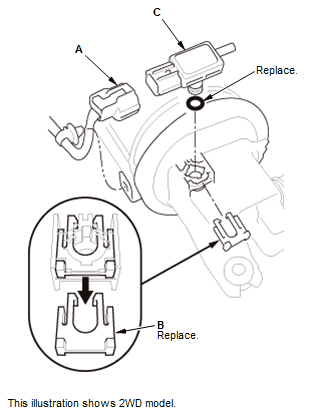
- Disconnect the connector (A).
- Remove the retainer (B), then remove the FTP sensor (C).
3. All Removed Parts - Install
- Install the parts in the reverse order of removal with a new O-ring and a new retainer.
IMT ACTUATOR REMOVAL AND INSTALLATION
Removal & Installation
1. Intake Manifold - Remove
2. IMT Actuator - Remove
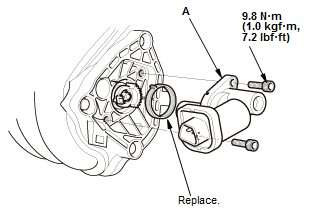
- Remove the IMT actuator (A).
3. All Removed Parts - Install
- Install the parts in the reverse order of removal with a new O-ring.
IMT VALVE REMOVAL AND INSTALLATION
Removal & Installation
1. IMT Actuator - Remove
2. IMT Valve - Remove
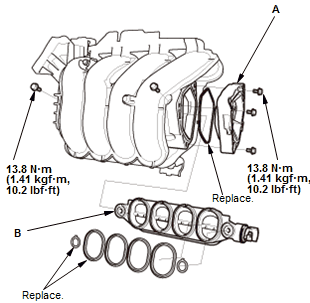
Fig. 24: IMT Valve Exploded View With Torque Specifications
- Remove the IMT cover (A)
- Remove the IMT valve (B).
3. All Removed Parts - Install
- Install the parts in the reverse order of removal with a new O-rings.
READ NEXT:
 Injector Removal and Installation
Removal
1. Fuel Pressure - Relieve
2. Fuel Injector and Rail Assembly - Remove
Disconnect the injector connectors (A).
Remove the harness clamp (B).
Disconnect the quick-connect fitting (C).
Rem
Intake Air Resonator Removal and Installation
Removal & Installation
1. Air Intake Duct - Remove
2. Intake Air Resonator Mounting Bolt - Remove
3. Left Front Splash Shield - Remove
4. Left Front Inner Fender - Remove - Refer to: Front Inner
Knock Sensor Removal and Installation
Removal & Installation
1. Intake Manifold - Remove
2. Knock Sensor - Remove
Fig. 28: Knock Sensor Location With Torque Specifications
Disconnect the connector (A)
Remove the knock sensor (B).
SEE MORE:
Heating and Cooling System
Using Vents, Heating and A/C
■Passenger Side Vents
Three separate front passenger side air vents allow for different air flow
rates
through the vehicle. Passengers can separately:
Adjust each vent to optimize airflow
throughout the vehicle.
Close individual vents to adjust passenger
comf
VSA Modulator-Control Unit Removal and Installation
Removal
Do not spill brake fluid on the vehicle; it may damage the paint. If brake
fluid gets on the paint, wash it off
immediately with water.
NOTE:
Be careful not to damage or deform the brake lines during removal.
To prevent the brake fluid from dripping, plug and cover the hose ends
and j
© 2019-2026 Copyright www.hohrv2.com
